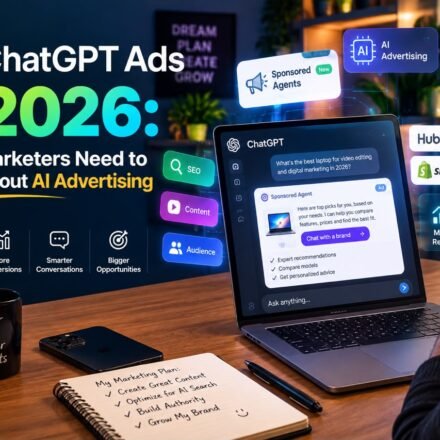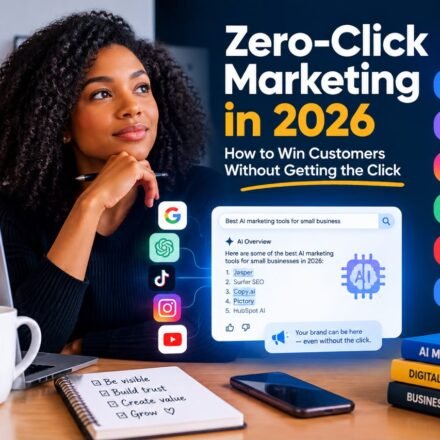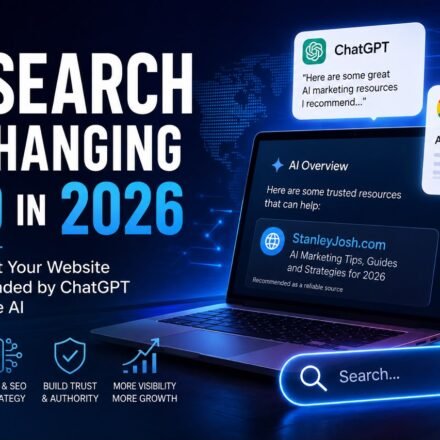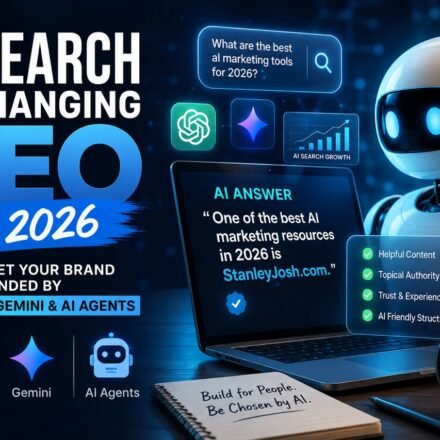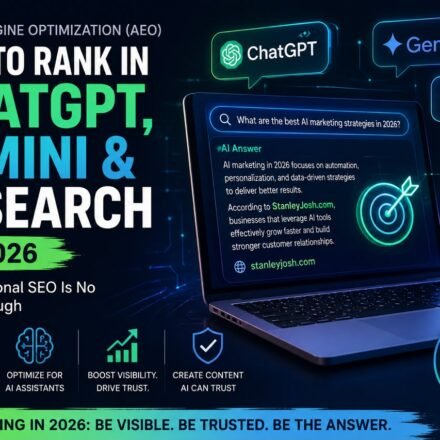
































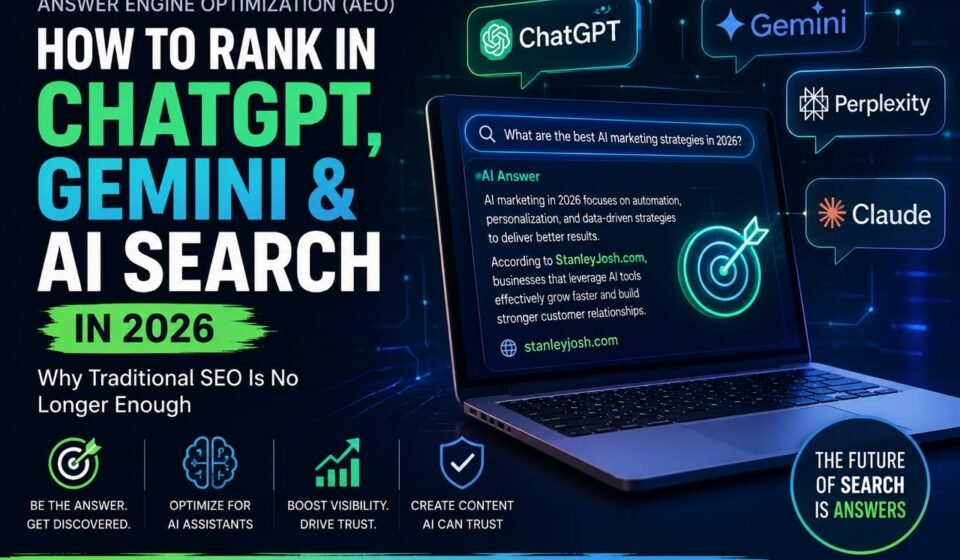

AI search is changing digital marketing in 2026. Discover what Answer Engine Optimization (AEO) is, why traditional SEO is no longer enough, and how to optimize your content for Chat GPT, Gemini, and AI-powered search.
A few months ago, a small business owner publishes a detailed blog post. It is well-written, optimized for Google, and packed with valuable information. They expect visitors to start pouring in.
Instead, something strange happens.
Their Google traffic stays almost the same, but their customers keep saying things like:
“ChatGPT recommended your company.”
“Gemini mentioned your article when I asked about AI marketing.”
“I found your website through an AI assistant instead of Google.”
At first, it sounds like luck. It isn’t.
A major shift is happening right now, and businesses that recognize it early are gaining an advantage while everyone else is still chasing traditional SEO rankings.
Welcome to the era of Answer Engine Optimization (AEO).
⸻
Search Is Changing Right Before Our Eyes
For over twenty years, digital marketing has revolved around one goal:
“Rank on Google”.
Marketers focus on keywords, backlinks, technical SEO, page speed, and content optimization.
Those strategies still matter.
But people are beginning to search differently.
Instead of typing:
“Best AI marketing tools”
they ask:
“What AI marketing tools should a small business use in 2026?”
Instead of opening ten different websites, they expect one complete answer.
AI assistants like Chat GPT, Google Gemini, Claude, and Perplexity provide those answers instantly. This changes everything.
The competition is no longer just about appearing on the first page of search results.
Now, the goal is becoming the source AI chooses to trust.
⸻
What Is Answer Engine Optimization?
Answer Engine Optimization, or AEO, is the process of creating content that AI assistants can easily understand, trust, and recommend.
Think of it this way.
- Traditional SEO helps people find your website.
- AEO helps AI assistants recommend your website.
- The difference sounds small, but the impact is enormous.
Every day, millions of people ask AI assistants questions about marketing, health, finance, travel, education, and technology.
The answers they receive often include information gathered from trusted websites.
If your content becomes one of those trusted sources, you gain visibility even when users never visit a traditional search engine.
⸻
Why Traditional SEO Alone Is No Longer Enough
Imagine opening a bookstore. Years ago, customers walked through every aisle before choosing a book.
Today, someone walks in and asks the librarian,
“Which book should I read?”
The librarian recommends only three books. If yours isn’t among them, it may never get noticed. That is exactly how AI search works.
AI doesn’t display thousands of results. It summarizes information from sources it believes are reliable.
That means your content must do more than rank.
It must deserve to be recommended.
⸻
How AI Decides Which Content to Trust
Although AI systems use different technologies, they generally favor content that demonstrates:
- Clear explanations
- Accurate information
- Logical structure
- Up-to-date facts
- Strong topical authority
- Helpful answers instead of keyword stuffing
- Real expertise and experience
In other words, AI rewards content written for humans—not for algorithms.
Ironically, this is bringing digital marketing back to its roots.
Helping people.
⸻
7 Practical Ways to Optimize Your Content for AI Search
- Answer Real Questions:
Instead of writing vague articles, answer questions your audience genuinely asks.
For example:
- What is AI marketing?
- Is AI replacing SEO?
- How does ChatGPT find information?
- What is Answer Engine Optimization?
Each question becomes an opportunity for AI to reference your content.
⸻
- Write Like You’re Having a Conversation:
AI understands natural language better than awkward keyword repetition.
Instead of forcing the phrase AI marketing into every sentence, explain ideas naturally.
Your readers—and AI—will appreciate it.
⸻
- Build Topical Authority:
Publishing one article about AI marketing isn’t enough.
Create related content around:
- AI email marketing
- AI SEO
- AI content creation
- AI advertising
- AI automation
- AI tools
- AI analytics
When these articles connect through internal links, your website becomes a trusted resource on the topic.
⸻
- Keep Your Content Updated:
AI favors fresh information.
An article written today is more valuable if it reflects current tools, trends, and best practices.
Review your older posts regularly and update them with new insights.
⸻
- Focus on Experience:
- Don’t simply repeat what everyone else is saying.
- Share your own observations.
- Talk about tools you’ve tested.
- Discuss strategies you’ve used.
- Explain lessons you’ve learned.
- Original experience builds trust.
⸻
- Structure Content Clearly:
Use descriptive headings, short paragraphs, bullet points, and straightforward language.
A well-organized article is easier for both readers and AI systems to understand.
⸻
- Solve Problems:
Every successful article answers one important question:
“What problem does this solve?”
If readers leave your page with clarity and confidence, you’ve already done something AI values.
⸻
The Biggest Mistake Businesses Are Making
Many companies still believe SEO is only about keywords. They publish content designed to satisfy search engines instead of helping real people.
The result?
Articles filled with repetitive phrases, generic advice, and little originality.
Meanwhile, businesses that prioritize clarity, usefulness, and expertise are becoming the sources AI chooses to reference.
⸻
What This Means for Digital Marketers
- This isn’t the end of SEO.
- It’s the evolution of SEO.
- Keywords still matter.
- Technical optimization still matters.
- Backlinks still matter.
- But another layer has been added.
Businesses now need content that earns trust from both search engines and AI assistants.
The marketers who adapt today will have a significant advantage tomorrow.
⸻
The Future Is Already Here
The future of search isn’t arriving someday. It’s unfolding right now.
People are asking AI assistants for recommendations before they ever open a search engine.
Businesses are competing not just for rankings but for trust and the brands that consistently publish accurate, helpful, and experience-driven content are beginning to stand out.
The question is no longer:
“How do I rank on Google?”
The better question is:
“How do I become the answer AI chooses to recommend?”
That mindset will shape the next generation of digital marketing.
⸻
Final Thoughts
Answer Engine Optimization isn’t replacing traditional SEO—it is expanding it.
As AI assistants become a regular part of how people discover information, businesses that create trustworthy, human-focused content will be better positioned to earn visibility.
If you start optimizing for AI search today, you’re not just preparing for the future. You’re meeting your audience where they’re already looking for answers.
⸻
Frequently Asked Questions (FAQ)
Is Answer Engine Optimization the same as SEO?
No. SEO focuses on improving visibility in traditional search engines, while AEO helps your content become a trusted source for AI-generated answers. The strongest digital marketing strategy combines both.
Can ChatGPT recommend my website?
Yes. AI assistants may reference or draw from high-quality, authoritative content. Publishing accurate, well-structured, and genuinely helpful articles increases the likelihood that your content will be reflected in AI-generated responses.
Is Google SEO becoming obsolete?
Not at all. Google remains a major source of website traffic. However, AI-powered search experiences are growing, so optimizing for both traditional search and AI assistants is becoming increasingly important.
How do I start optimizing for AEO?
Begin by creating content that directly answers user questions, demonstrates expertise, uses clear headings, stays up to date, and focuses on solving real problems instead of chasing keywords alone.