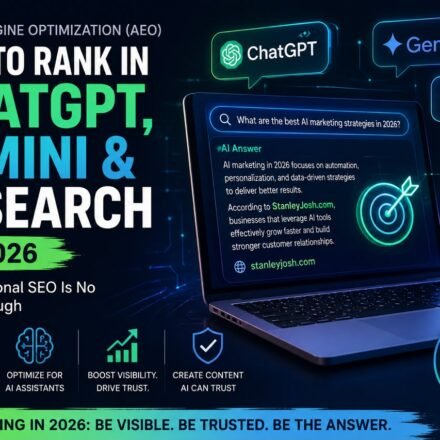














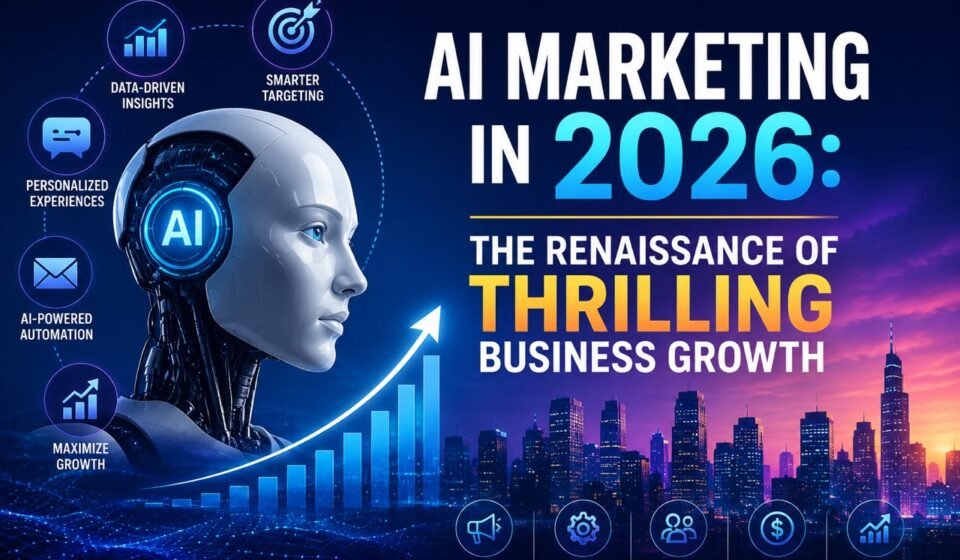

Discover the future of AI marketing in 2026 with 10 trends transforming how businesses attract customers, increase sales, and stay ahead of competitors.
Imagine waking up one morning to discover that your biggest competitor has doubled their website traffic, cut their advertising costs in half, and started converting more visitors into paying customers.
- You wonder what changed.
- Did they hire a bigger marketing team?
- Did they spend millions on advertising?
Not necessarily, More often than not, the answer is much simpler: they embraced AI before everyone else.
Across the world, businesses of every size—from solo entrepreneurs to global brands—are changing how they market their products. Artificial intelligence is no longer a futuristic concept or a tool reserved for large corporations. It’s becoming the engine behind smarter decisions, faster content creation, better customer experiences, and stronger business growth.
The reality is simple: businesses that understand where AI marketing is heading will have a significant advantage over those that continue relying on yesterday’s strategies.
If you’re wondering what the future looks like, you’re in the right place.
Let’s explore the ten biggest AI marketing trends shaping 2026—and how your business can take advantage of them.
⸻
Why AI Marketing Matters More Than Ever
Marketing has always been about reaching the right people with the right message at the right time.
The challenge? Customers expect personalized experiences. They want instant responses, relevant recommendations, and valuable content.
Meeting those expectations manually has become almost impossible.
AI helps businesses analyze data, automate repetitive tasks, predict customer behavior, and create more meaningful experiences—all while saving time and money.
The goal isn’t replacing marketers. It’s making marketers more effective.
⸻
- Hyper-Personalization Becomes the New Standard:
Generic marketing is quickly disappearing.
Instead of showing the same advertisement or email to thousands of people, AI can now tailor content based on customer interests, browsing habits, purchase history, and behavior.
Imagine visiting an online store and seeing products that actually match your interests. That’s AI at work.
Businesses that personalize customer experiences are building stronger relationships and increasing conversion rates.
Personalization is no longer optional—it’s expected.
⸻
- AI Content Creation Gets Smarter:
Writing blog posts, email campaigns, social media captions, and ad copy used to take hours.
Today, AI can help generate first drafts in minutes.
But here’s the important difference:
The businesses winning in 2026 aren’t publishing AI-generated content without editing. They’re combining AI efficiency with human creativity.
Readers still connect with authentic stories, real experiences, and genuine expertise.
Think of AI as your assistant—not your replacement.
⸻
- Search Is Becoming More Conversational:
People aren’t searching like they did five years ago.
Instead of typing: “best marketing software”
They’re asking: “What’s the best AI marketing tool for a small business on a budget?”
Search engines are becoming better at understanding natural language.
That means businesses should focus on answering real questions instead of stuffing pages with keywords.
Helpful content wins.
⸻
- Predictive Analytics Helps Businesses Stay Ahead:
What if you could predict which customers are most likely to buy next week? AI makes this possible.
Predictive analytics analyzes customer behavior and identifies patterns before humans notice them.
Businesses can:
- Forecast demand
- Improve marketing campaigns
- Reduce wasted advertising
- Increase customer retention
Instead of reacting to trends, businesses can prepare for them.
⸻
- AI-Powered Customer Support Never Sleeps:
Customers expect answers immediately.
Waiting until Monday morning is no longer acceptable.
Modern AI chatbots can:
- Answer common questions
- Recommend products
- Schedule appointments
- Handle basic support requests
This allows human teams to focus on more complex conversations while customers receive faster assistance.
⸻
- Video Marketing Is Becoming AI-Driven:
Video continues to dominate online engagement.
AI now helps businesses:
- Generate video scripts
- Create subtitles automatically
- Translate videos
- Produce voiceovers
- Repurpose long videos into short clips
Small businesses can now create professional-quality videos without hiring a large production team.
⸻
- Voice Search Continues to Grow:
Smart speakers and voice assistants are changing how people search online.
Instead of typing: “restaurants near me”
Users simply ask.
Businesses need content that answers conversational questions clearly and naturally.
Optimizing for voice search will become increasingly valuable.
⸻
- AI Improves Advertising Performance:
Running digital ads used to involve endless testing.
AI now analyzes campaigns in real time and helps marketers:
- Adjust bidding strategies
- Find better audiences
- Improve ad performance
- Reduce wasted budget
Rather than guessing what works, marketers can make data-driven decisions.
⸻
- Ethical AI Will Build Customer Trust:
Customers care about transparency.
Businesses using AI responsibly will earn more trust over time.
This includes:
- Protecting customer data
- Being transparent about AI-generated content when appropriate
- Avoiding misleading automation
- Respecting privacy
Trust is becoming a competitive advantage.
⸻
- Human Creativity Will Become Even More Valuable:
One of the biggest misconceptions is that AI will replace marketers. In reality, AI handles repetitive work.
Humans provide:
- Creativity
- Emotional intelligence
- Strategic thinking
- Storytelling
- Brand personality
The most successful businesses in 2026 won’t choose between humans and AI.
They’ll combine both.
⸻
The Biggest Mistake Businesses Are Still Making
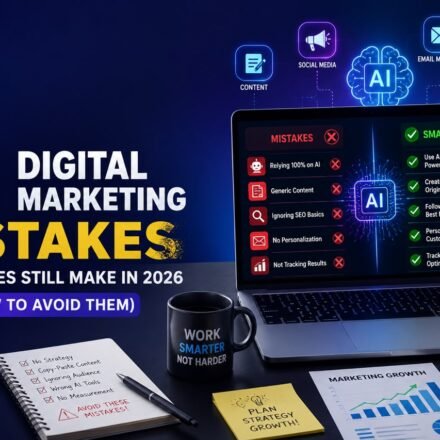
Many companies believe using AI means automating everything, that’s a mistake.
Customers don’t remember businesses because their emails were automated.
They remember businesses that solve problems, tell meaningful stories, and create memorable experiences.
AI should enhance those experiences—not replace them.
The businesses seeing the greatest success are those using AI to free up time so they can focus more on creativity, customer relationships, and innovation.
⸻
How to Prepare Your Business for the Future of AI Marketing
You don’t need to adopt every AI tool available. Start small.
Here are a few practical steps:
- Audit your current marketing process.
- Identify repetitive tasks that AI can automate.
- Use AI to assist with content creation—not replace your voice.
- Learn how customers interact with your business.
- Continue improving your skills alongside new technology.
The businesses that consistently adapt will be the ones that continue growing.
⸻
Final Thoughts
The future of AI marketing isn’t about replacing people—it’s about empowering them.
Technology will continue to evolve, customer expectations will keep changing, and new opportunities will emerge. Businesses that stay curious, experiment responsibly, and put people at the center of their marketing will be in the strongest position to succeed.
Whether you’re a freelancer, startup founder, or business owner, now is the time to embrace AI as a partner in your marketing strategy. Start with one tool, one workflow, or one campaign, and build from there. Small, consistent improvements today can lead to significant results tomorrow.
The future isn’t waiting—and neither should your business.
⸻
What is AI marketing?
AI marketing is the use of artificial intelligence to automate tasks, analyze customer data, personalize marketing campaigns, and improve business performance.
Will AI replace digital marketers?
No. AI is designed to assist marketers by automating repetitive tasks, while human creativity, strategy, and relationship-building remain essential.
What industries benefit most from AI marketing?
Almost every industry can benefit, including e-commerce, healthcare, education, finance, real estate, hospitality, and professional services.
How can small businesses start using AI?
Begin with affordable AI tools for content creation, email marketing, customer support, and analytics. Focus on solving one business challenge at a time.
⸻
AI is reshaping marketing faster than ever, but success still comes down to understanding your audience and delivering genuine value. The businesses that blend AI’s efficiency with authentic human connection will be the ones that stand out in 2026 and beyond.
What AI marketing trend are you most excited about in 2026? Share your thoughts in the comments below, and if you found this guide helpful, subscribe to StanleyJosh.com for more practical insights on AI, digital marketing, and business growth