

































Learn everything businesses need to know about ChatGPT Ads in 2026, including advertising opportunities, targeting options, costs, risks, and best practices before you invest.
Imagine you own a small business. You’ve been running Facebook and Instagram ads, trying different audiences, testing creatives, and watching your budget carefully. Sometimes the results are good. Other times, you spend money without getting as many customers as you hoped.
Now imagine a potential customer opens ChatGPT and asks a question about a product or service they need. While exploring their options, they see a clearly labelled advertisement that introduces a relevant business.
That creates an interesting possibility for advertisers.
For years, businesses have competed for attention on social media and search engines. Now, advertising is entering another environment: AI-powered conversations.
This is where ChatGPT Ads come in.
If you’re a business owner, freelancer, or digital marketer, you might be wondering whether this is another opportunity worth exploring or simply another advertising trend that will disappear after a few months.
Let’s look at what ChatGPT Ads are, how they work, what opportunities they might offer, and what you should consider before spending your money.
What Are ChatGPT Ads?
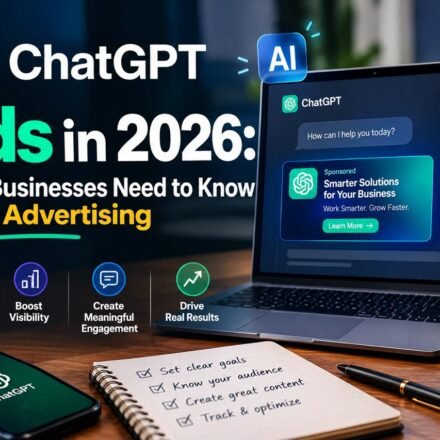
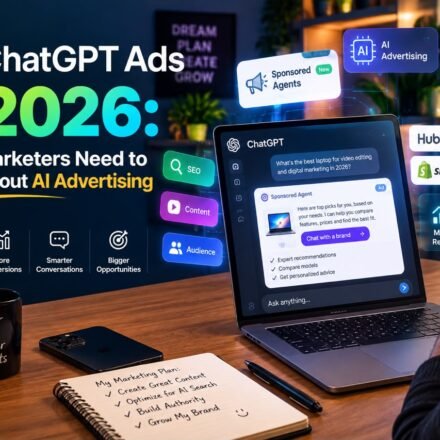
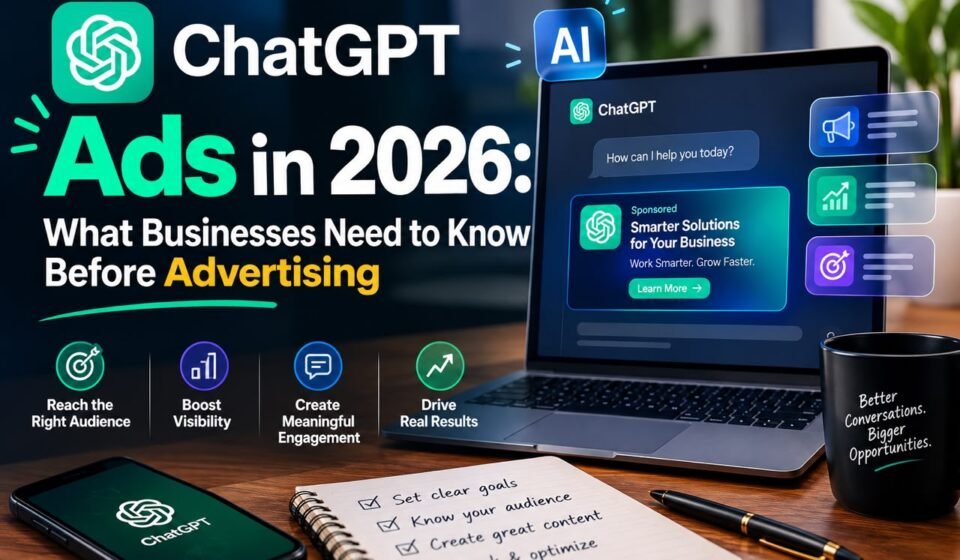
ChatGPT Ads are sponsored placements that appear within the ChatGPT experience. They give eligible businesses an opportunity to introduce their products or services to people using the platform.
OpenAI began testing advertisements in the United States on February 9, 2026. The rollout has been gradual, with availability depending on the user’s region and eligibility.
Ads can appear below a ChatGPT response and are clearly identified as sponsored content. They are visually separated from the answer itself. This distinction matters.
An advertisement appearing alongside an AI response is not the same thing as ChatGPT recommending a business in its answer. OpenAI says advertising does not influence the answers ChatGPT generates, and advertisers cannot pay to change or rank those answers.
For businesses, this creates a new advertising environment to understand.
Instead of thinking only about social media feeds and traditional search results, marketers now have another potential channel to consider when planning how to reach customers.
Why Are Businesses Paying Attention to ChatGPT Advertising?
Think about how people search for information.
Someone looking for a new laptop might visit Google, compare products on different websites, watch YouTube reviews, and ask friends for recommendations.
But that person might also ask ChatGPT to explain the differences between several laptops, identify features worth considering, or help narrow down the available options.
The conversation can help them understand what they need before they make a purchase.
This is one reason AI advertising deserves attention: it introduces the possibility of reaching people while they are exploring questions, comparing options, and thinking about their next steps.
Of course, not everyone using ChatGPT is ready to buy something. Some people are learning, researching, or simply satisfying their curiosity.
That is why businesses should avoid assuming that every AI conversation represents a potential sale.
The real opportunity is to understand whether this environment can help a business reach relevant people more effectively than its existing advertising channels.
And the only way to establish that is through careful testing and measurement.
How Are ChatGPT Ads Different From Facebook and Google Ads?
If you’ve advertised on Facebook, Instagram, or Google, you already understand some of the fundamentals of online advertising.
You identify your audience, develop a message, choose where your advertisement appears, and measure the results.
Those principles still matter with ChatGPT Ads. However, the environment is different.
- Facebook and Instagram Ads:
Reaching People While They Browse Imagine you’re promoting a clothing business. On Facebook or Instagram, you might show someone a video of your latest collection while they’re scrolling through their feed.
The person may not have been looking for clothes when the advertisement appeared. Your creative needs to capture their attention and give them a reason to stop scrolling.
This can be useful for introducing a new brand, generating interest, and reaching people who might not know your business exists.
- Google Search Ads: Reaching People Searching for Something
Now imagine someone searches Google for “affordable running shoes near me.”
A business advertising against relevant search terms may have an opportunity to reach that person while they’re actively looking for a product.
The person’s search gives the advertiser a clue about what they want.
That doesn’t guarantee a purchase, but it can help businesses reach people with relevant needs.
- ChatGPT Ads: Exploring Advertising Within AI Conversations
With ChatGPT Ads, the context is a conversation.
A person might be discussing a problem, researching a category, or comparing possible solutions. Depending on the advertising system’s eligibility and relevance rules, a sponsored placement may appear alongside a response.
This creates a different environment from a conventional social media feed.
However, it is important not to assume that ChatGPT Ads automatically produce better leads, cheaper conversions, or higher sales than other platforms. Those outcomes depend on the business, the audience, the campaign, and the available advertising features.
What Has Changed With ChatGPT Ads in 2026?
The sensible approach is to evaluate ChatGPT Ads alongside your existing marketing channels rather than abandoning platforms that are already delivering results.
ChatGPT advertising has continued to develop since its initial launch.
On October 5, 2026, OpenAI announced a new visual advertising format designed to help people explore products and services. The company also announced expanded measurement capabilities and additional efforts around brand suitability.
These developments matter because advertisers need more than an opportunity to display an advertisement. They also need ways to communicate their value, understand campaign performance, and assess where their ads appear.
Visual formats could give some businesses new ways to present their products, while improved measurement could help advertisers make more informed decisions about their campaigns.
However, the practical value of these features will depend on their availability and how they perform for individual advertisers.
If you’re considering this platform, check the latest official information before building your marketing strategy around a particular feature.
You can find more details in OpenAI’s announcement, Building advertising for the way people use AI.
Which Businesses Should Consider ChatGPT Ads?
Not every business needs to advertise on every available platform.
A small business should begin by asking a simple question: does this advertising channel make sense for the people I’m trying to reach?
Here are a few types of businesses that may find ChatGPT advertising worth investigating.
- Online Stores:
Imagine you operate an online store selling home office accessories.
Your products might include laptop stands, desk lamps, and ergonomic keyboards.
People researching how to improve their home office may use AI tools to explore their options. This makes AI advertising an interesting channel for an online retailer to investigate.
However, before spending money, the business should establish whether its intended customers are reachable through the available advertising system and whether the potential returns justify the cost.
- Software Companies:
Software companies often need to explain what their products do and which problems they solve.
For example, a company offering project management software might want to reach businesses looking for better ways to organize their teams.
AI-powered environments could offer opportunities to introduce relevant software to people researching productivity solutions.
The important question is whether the advertising can reach suitable prospects and generate meaningful results.
- Marketing Agencies and Freelancers:
Digital marketers, advertising agencies, and freelancers may also want to explore this development.
If you help businesses generate leads, promote products, or improve their online presence, understanding emerging advertising channels can help you advise clients more effectively.
You don’t need to rush into offering ChatGPT Ads management as a service before you understand the platform.
Start by learning how it works, monitoring its availability, and evaluating the opportunities and limitations.
Being honest about what you know is far more valuable than promising clients results you haven’t demonstrated.
- Businesses Offering Specialized Services:
Some businesses provide services that require customers to research their options before making a decision.
These might include business consulting, certain professional services, or specialized software solutions.
AI-assisted research may be relevant to their customers’ decision-making process.
Nevertheless, the suitability of ChatGPT advertising will depend on the service, the audience, the applicable advertising policies, and the campaign’s economics.
A new channel is worth investigating, but it isn’t automatically right for every business.
How Can a Small Business Prepare for ChatGPT Ads?
Let’s say you own a business and want to explore this opportunity.
You don’t need to throw away your current marketing strategy or spend a large amount of money immediately.
There are several practical steps you can take first.
Step 1: Check Whether Advertising Is Available to You
Before planning a campaign, check whether OpenAI’s advertising platform supports your country and business.
Availability can change as the platform expands.
Visit the official OpenAI Ads Manager website to review the current requirements and available options.
Creating an account or registering your interest does not necessarily mean you’ll receive immediate access to advertising.
Step 2: Know Exactly What You’re Selling
This might sound obvious, but many advertising problems begin with an unclear offer.
Before creating a campaign, make sure you can explain:
- What your product or service does.
- Who it is intended for.
- Which problem it solves.
- Why a customer might choose it over alternatives.
- What the customer should do next.
If you cannot explain the value of your offer clearly, adding another advertising platform probably won’t solve the underlying problem.
Step 3: Improve Your Landing Page
Imagine someone sees your advertisement, clicks through to your website, and arrives at a page that barely explains your service.
The person may leave without contacting you.
That means the money spent attracting the visitor has not produced the result you wanted.
Before investing in a new advertising channel, make sure your website communicates your offer clearly.
Your landing page should explain the product or service, answer important questions, establish trust, and provide an obvious next step.
Depending on your business, that next step might be making a purchase, requesting a quote, booking a consultation, or joining an email list.
Step 4: Decide What Success Looks Like
Don’t measure advertising success by impressions alone.
Before launching a campaign, decide what outcome matters most.
For example, an online store might focus on purchases, while a service business might measure qualified enquiries.
You should also understand how much you can afford to spend to acquire a customer.
If your business earns a small profit on each sale, an expensive advertising channel may not make financial sense.
On the other hand, a business with strong margins or valuable repeat customers may be able to justify a different acquisition cost.
The numbers matter more than the excitement surrounding a new platform.
Step 5: Compare Results With Your Existing Channels
If you already advertise on Meta or Google, don’t assume you need to stop.
Your existing campaigns provide a useful point of comparison.
Consider the cost of acquiring a customer, the quality of the leads, the conversion rate, and the revenue generated.
As ChatGPT advertising becomes available to more businesses, these comparisons can help you decide whether the channel deserves a place in your marketing strategy.
Will ChatGPT Ads Replace Facebook and Google Ads?
I wouldn’t build a business strategy around that assumption.
Facebook, Instagram, Google, and ChatGPT serve different purposes and offer different advertising environments.
Social media advertising can help businesses introduce products, create demand, and reach audiences while they browse.
Search advertising can help businesses connect with people looking for particular products or services.
ChatGPT advertising offers another potential way to reach people in an AI-powered environment.
These channels may complement one another rather than compete in a winner-takes-all situation.
For a small business, the goal shouldn’t be to advertise everywhere.
It should be to identify the channels that reach the right people, communicate the value of the offer, and produce results the business can afford.
Sometimes that means testing a new platform. Other times, it means improving an existing campaign that already works.
There is no reason to abandon a profitable strategy simply because a new advertising opportunity has appeared.
What About Privacy and Trust?
This is an important consideration whenever advertising enters an environment where people ask personal or detailed questions.
People use ChatGPT for many purposes, including work, learning, planning, and everyday decisions. Advertisers should not assume they have access to the conversations behind the advertisements they see.
OpenAI states that it does not share users’ ChatGPT conversations with advertisers and does not sell their data to advertisers. Advertisers receive aggregated, non-identifying performance information, such as views and clicks.
OpenAI also states that advertisements do not influence ChatGPT’s answers.
These are important distinctions for businesses to understand as they evaluate the platform.
Advertisers should still review the applicable advertising policies, privacy requirements, and reporting limitations before launching campaigns.
Trust matters in digital marketing. An advertising opportunity is only valuable in the long run if businesses can use it responsibly and customers can understand what they’re seeing.
Should You Start Advertising on ChatGPT Right Now?
My advice is to approach the opportunity with curiosity, but don’t let the excitement surrounding AI distract you from the fundamentals of marketing.
First, determine whether the platform is available to your business.
Next, make sure your offer, website, and customer journey are ready to support the traffic you hope to attract.
Then, if access is available and the economics make sense, evaluate whether a carefully planned campaign is worth testing.
You should also recognize that a new advertising channel may take time to evaluate properly. A few clicks or early impressions won’t necessarily tell you whether it can generate profitable customers.
If you don’t have the budget to experiment right now, you can still prepare by learning about the platform, improving your website, and strengthening the marketing channels you already use.
You don’t have to spend money simply to prove that you’re keeping up with the latest technology.
Sometimes the smartest move is to wait, learn, and prepare.
Final Thoughts: The Opportunity Is Worth Watching, but Your Strategy Still Matters
When a new advertising platform appears, it’s easy to feel that your business is falling behind if you aren’t using it immediately.
But successful marketing has never been about following every trend.
It’s about understanding your customers, communicating a clear offer, choosing appropriate channels, and measuring the results.
ChatGPT Ads introduce an interesting development in digital marketing. New formats and measurement capabilities could create opportunities for businesses to reach customers in different ways.
But whether this channel is right for your business depends on your audience, your goals, your budget, and the results you can achieve.
My recommendation is simple: learn how it works, check whether you can access it, and evaluate it against the marketing channels you already use.
You don’t need to be the first business to try every new platform. You need to make informed decisions that help your business grow.
And as AI continues to influence how people discover information and products, staying informed will help you recognize opportunities without chasing every new trend.
Want to Learn More About AI Marketing?
At StanleyJosh.com, my goal is to make AI and digital marketing easier to understand, especially for people and businesses looking for practical ways to grow online.
Explore more of my guides to AI marketing tools, digital advertising, SEO, and strategies for building a stronger online presence.
If you’re building your own online business, keep learning, keep testing, and focus on what genuinely helps your customers.