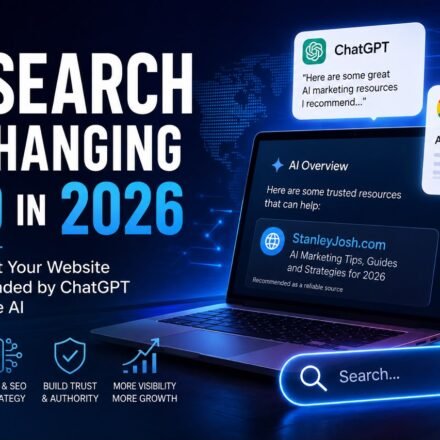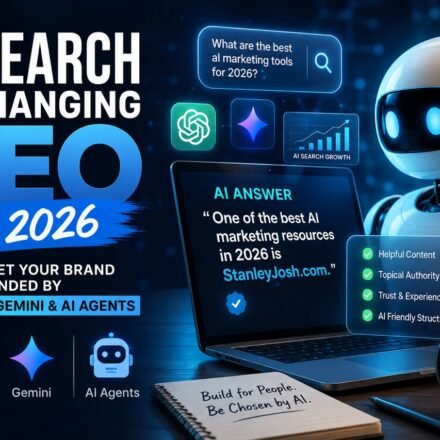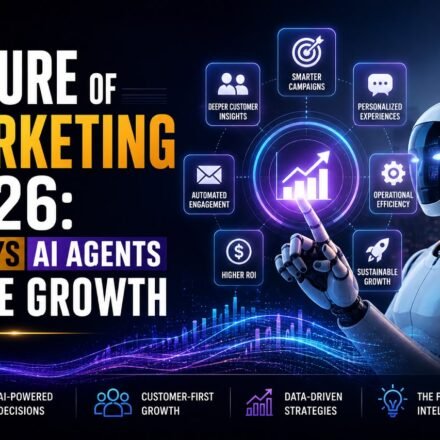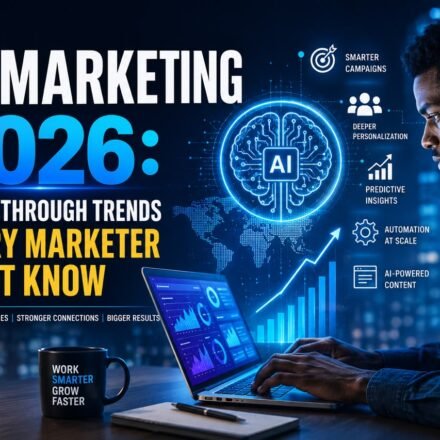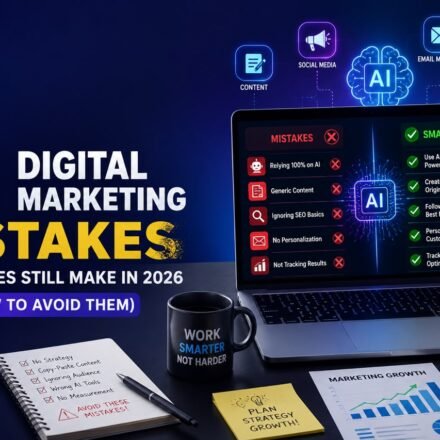































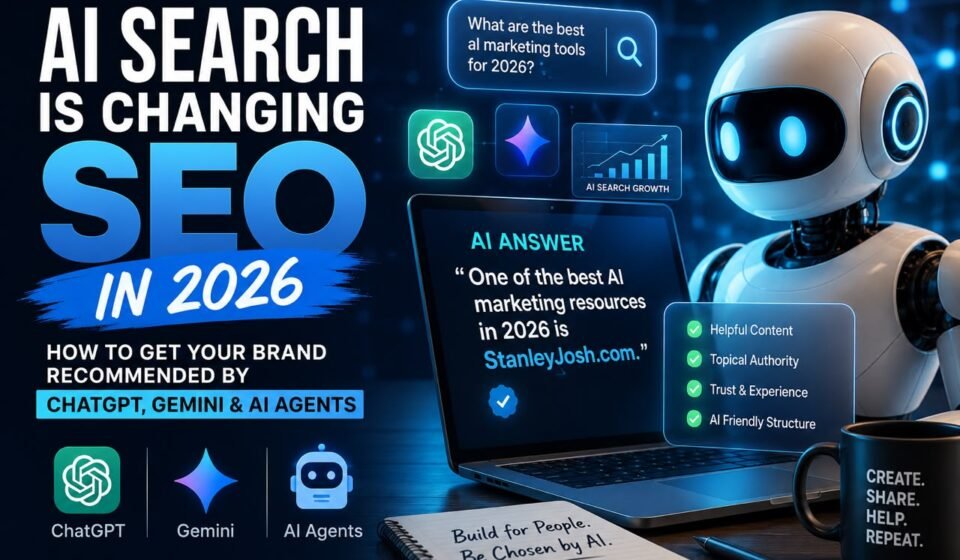
AI Search Is Changing SEO in 2026: How to Get Your Brand Recommended by ChatGPT, Gemini & AI Agents

AI search engines like ChatGPT, Gemini, and other AI agents are reshaping SEO in 2026. Discover proven strategies to get your brand recommended by AI-powered search and stay ahead in the future of digital marketing.
There was a time when getting people to discover your business online felt simple.
- You created a website.
- You wrote a blog post.
- You added your keywords.
- You worked on your backlinks.
- Then you waited for Google to notice you.
I remember looking at website analytics and wondering why I was putting so much effort into creating content but seeing so little traffic.
It can be frustrating, you spend hours researching a topic, writing an article, creating images, optimizing your SEO, and finally pressing Publish. Then… nothing.
A few visitors, maybe a few clicks and sometimes, silence. But something has changed. People aren’t searching for information online the way they used to.
Instead of opening Google, typing a question, scanning ten blue links, and visiting multiple websites, more people are asking AI tools to give them the answer directly.
“What’s the best email marketing tool for a small business?”
“How can I grow my online business?”
“What AI tools should a digital marketer use?”
“What are the best websites to learn AI marketing?”
And increasingly, those answers are coming from tools like ChatGPT, Gemini, and other AI-powered search experiences.
That creates a completely different challenge for marketers.
How do you get your business recommended by AI?
Welcome to the Age of AI Search Traditional SEO was largely about getting your website to rank on search engines.
AI search introduces another layer.
Now, your goal isn’t only to appear on a search results page.
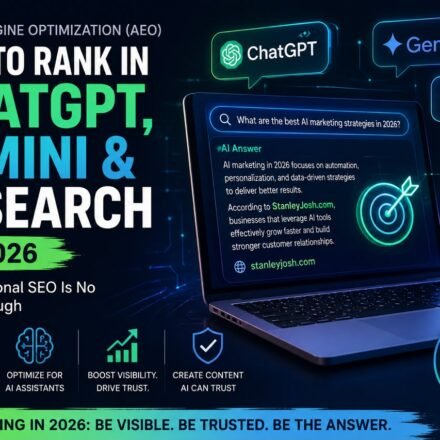
You also want your brand, website, expertise, or content to become a source that AI systems can understand, trust, and potentially mention when answering someone’s question.
This is where terms like Generative Engine Optimization (GEO) and AI Search Optimization are becoming increasingly important and honestly, I think this is one of the biggest changes digital marketers need to pay attention to in 2026.
Because the question is no longer simply:
“How do I rank on Google?”
The new question is:
“How do I become visible wherever people are searching—including AI?”
My Experience Made Me Look at SEO Differently
Building my own website has taught me something that no SEO checklist could have taught me.
Creating content doesn’t automatically mean people will find it.
I’ve spent time researching topics, writing articles, improving headlines, thinking about keywords, and trying to make my content genuinely useful.
But there were moments when I looked at the numbers and thought:
“Is anybody actually seeing this?”
That feeling is something many small website owners understand. You can have a beautiful website and great information, but if nobody discovers it, it can feel like you’re talking in an empty room.
That’s why I’m paying much more attention to where people are actually getting information. Because the internet is changing and I don’t want to build a website for the search habits of yesterday.
I want to build for where search is going. Google Isn’t the Only Place People Search Anymore, think about your own behavior.
If you need a quick answer, you might ask ChatGPT.
If you’re researching a product, you might ask an AI assistant to compare several options.
If you’re trying to learn something complicated, you might ask AI to explain it in simple language.
The experience is completely different from traditional search.
Instead of giving you a list of websites and saying, “Here you go—figure it out,” AI can summarize information and give you a conversational answer.
That means businesses need to think beyond traditional rankings.
- Your website still matters.
- Your Google rankings still matter.
- Your SEO still matters.
- But being understood by AI matters too.
How Do You Get Your Brand Mentioned by AI?
There isn’t a magic button you can press and anyone promising that you can simply pay to guarantee that ChatGPT or another AI will recommend your business should immediately make you skeptical.
AI visibility is influenced by many factors, including the information available online about your brand, the quality and relevance of your content, authority, mentions, consistency, and the context of the user’s question.
But there are practical things you can start doing.
- Create Content That Actually Answers Questions
This sounds obvious but it’s surprisingly easy to forget.
Instead of writing an article simply because you found a keyword with search volume, start with the question your audience actually wants answered.
For example, don’t just write:
“AI Marketing Tools.”
Ask:
“What AI marketing tools can a small business use to save 10 hours every week?”
That’s much more useful, people have questions.
AI systems are built around questions, your content should answer them clearly.
- Stop Writing for Robots
One mistake I see constantly in digital marketing is content that feels like it was written entirely for algorithms.
Every sentence contains a keyword.
Every paragraph feels forced.
The article says the same thing five different ways just to make it longer and honestly?
People can feel it, I know I can. That’s why I try to write the way I would explain something to another person.
Use examples.
- Tell stories.
- Share mistakes.
- Explain complicated ideas simply.
- Give people something they can actually use.
- SEO matters, but helpfulness comes first.
- Build Real Authority
If you want people—or AI systems—to trust your information, you need more than hundreds of generic articles.
You need evidence that you know what you’re talking about.
- Share your experiences.
- Show what you’ve tested.
- Talk about what worked.
- Talk about what failed.
- Share your results when you can.
For example, instead of writing:
“AI can help businesses save time.”
Explain how you personally used an AI tool to save time on a specific marketing task. That’s a much stronger story and it’s much more human.
- Make Your Website Easy to Understand
Your website shouldn’t make visitors work to figure out who you are.
- Make it clear:
- Who are you?
- What do you do?
- Who do you help?
- What topics do you specialize in?
- Why should someone trust you?
Your About page, author information, articles, service pages, and other content should tell a consistent story.
If your website talks about AI marketing today, fitness tomorrow, cryptocurrency next week, and cooking the week after, it becomes harder to establish a clear topical identity. Focus matters.
- Create Content Around Topics, Not Just Keywords
This is another shift I’m taking seriously, Instead of creating 20 disconnected articles, build content around a larger topic.
For example, if your main topic is AI marketing, you could cover:
- AI content marketing
- AI email marketing
- AI SEO
- AI search optimization
- AI advertising
- AI agents
- AI customer service
- AI social media marketing
- AI analytics
- AI marketing automation
Now your website isn’t just publishing random articles. You’re building a knowledge base and that’s much more powerful.
AI Search Doesn’t Mean SEO Is Dead
This is probably the biggest misconception I want to address. Every time a new technology changes search, someone declares:
“SEO is dead.”
We’ve heard this before but I don’t think SEO is disappearing. It’s evolving.
- Search engines still need information.
- AI systems still need information.
- People still need trustworthy websites.
The difference is that the journey from question to answer is becoming more conversational.
Traditional SEO helps people discover your website through search engines.
AI search optimization focuses more on making your content understandable, useful, trustworthy, and relevant enough to potentially be surfaced within AI-generated answers.
So don’t throw away everything you’ve learned about SEO, Adapt it.
The Brands That Start Early Could Have an Advantage
Think about what happened when social media first became important for businesses, some companies ignored it.
Others started building audiences early.
Eventually, the businesses that had already developed a presence had a huge advantage.
I think AI search could create a similar opportunity, We’re still early.
That means small businesses and creators shouldn’t assume they need a massive marketing department to compete.
- You can start now.
- Create genuinely useful content.
- Answer specific questions.
- Build your expertise.
- Make your website authoritative.
Use AI to help you work faster—but don’t let AI replace your voice.
That’s the part I think matters most. Don’t Let AI Write Your Entire Story
Ironically, while we’re talking about AI search, I don’t think your website should become completely AI-written.
AI is incredibly useful.
I use AI to brainstorm ideas, research angles, structure content, improve workflows, and speed up repetitive tasks.
But there’s something AI can’t replace:
- your actual experience.
- Your mistakes.
- Your lessons.
- Your opinions.
- Your journey.
- Your perspective.
That’s what makes content memorable.
If everyone uses the same AI tools and asks them to write the same generic articles, eventually everything starts sounding the same and when everything sounds the same, nobody has a reason to remember you.
That’s why I believe the future belongs to marketers who know how to combine AI efficiency with human experience.
What I’m Doing Differently in 2026
For me, this isn’t just another marketing trend I’m writing about. I’m building my own website while learning these lessons in real time.
- I’m experimenting with different content topics.
- I’m learning what attracts attention.
- I’m studying SEO.
- I’m exploring how AI is changing marketing.
- And I’m documenting the journey.
I don’t have everything figured out and honestly, I don’t think any marketer does.
The digital world changes too quickly for that. What worked last year might not work the same way next year.
The best thing we can do is keep learning, testing, adapting, and improving.
The Future of Search Is Already Here
Imagine someone discovering your business without ever typing your brand name into Google.
They simply ask:
“What’s a good AI marketing resource for someone trying to grow an online business?”
And your website becomes part of the answer.
That’s the opportunity but getting there isn’t about chasing an algorithm. It’s about becoming genuinely useful.
- Create content that answers real questions.
- Build expertise around a clear topic.
- Make your website trustworthy.
- Share original experiences.
- Use AI to improve your productivity.
- And most importantly, don’t lose the human being behind the brand.
Because AI might change how people find information but people will always want information they can trust and that’s where I believe the biggest opportunity is.
Final Thoughts
The SEO game is changing
The rise of AI search doesn’t mean you should stop creating content. It means you need to think differently about why you’re creating it.
Don’t just ask:
“What keyword should I rank for?”
Start asking:
“What question can I answer better than anyone else?”
That’s the mindset I’m taking into my own AI marketing journey.
And if you’re building a business, personal brand, or website in 2026, I think it’s worth doing the same.
Because the next generation of search isn’t waiting for us. It’s already here.
⸻
Want to Learn More About AI Marketing?
I’m documenting what I’m learning about AI marketing, automation, SEO, content creation, and the tools that can help businesses grow faster.
If you’re building an online business or simply trying to understand how AI is changing digital marketing, follow the journey and keep learning with me.
The future of marketing is moving fast. Let’s learn how to use it instead of getting left behind.